
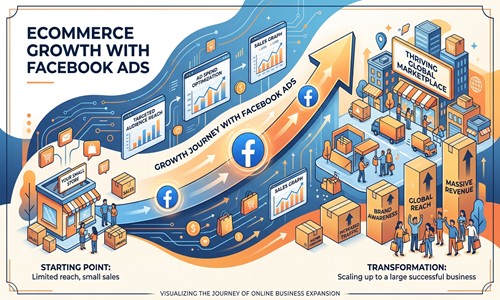
Most ecommerce guides treat Facebook advertising like a magic button. Spend money, get sales, scale up. If only it were that simple. To truly succeed, you need to understand the best Facebook ads for ecommerce.
After running ads for dozens of ecommerce brands, I’ve learned something the ‘growth hackers’ don’t like to admit: scaling with Facebook ads is 20% strategy and 80% patience, testing, and not quitting when things break. Discovering the best Facebook ads for ecommerce can make all the difference.
Here’s what actually works when you want to take your ecommerce store from ‘making a few sales’ to ‘legitimate revenue machine.’
Stop Chasing Vanity Metrics First
Exploring the Best Facebook Ads for Ecommerce
The biggest mistake new advertisers make? Getting excited about impressions and clicks instead of revenue.
Understanding the best Facebook ads for ecommerce is crucial in this journey.
Here’s a scenario I see constantly: Someone launches a campaign, sees 50,000 impressions, 2,000 clicks, and immediately thinks they’re winning. Then they check the revenue and realize they spent $500 to make $180 in sales.
The fix: Before you launch anything, lock your eyes on one number — your return on ad spend (ROAS). Everything else is noise.
| ROAS | What It Means |
| 2x ROAS | Barely breaking even after all costs |
| 3x ROAS | You’re actually making money |
| 4x+ ROAS | Time to scale aggressively! |
ROAS Benchmark:

If you’re below 2x, stop thinking about scaling. Fix your foundation first.
The Facebook Pixel Isn’t Optional
I cannot stress this enough — if your pixel isn’t firing correctly, you’re basically throwing money into a furnace.
The Facebook Pixel does two critical things:
1. Tracks conversions so Facebook knows which audiences actually buy
2. Builds lookalike audiences that find people like your best customers
Setting it up takes 10 minutes. Skipping it costs you months of bad data and wasted budget.
Audiences: The Secret Sauce Nobody Talks About
Facebook’s targeting options are overwhelming. Here’s the progression most successful ecommerce brands follow:
| Phase | What To Do | Duration |
| Phase 1: Research | Broad targeting + interests. Let algorithm learn. | 7-14 days |
| Phase 2: Custom | Create Custom Audiences from customers/visitors | Ongoing |
| Phase 3: Lookalike | Build Lookalikes from 100+ conversions | After 100 sales |
The golden rule: Always include retargeting in your rotation. People who visited your site but didn’t buy are your lowest-hanging fruit.
Creative is What Makes or Breaks Your Ads
Here’s an uncomfortable truth: Your targeting could be perfect, but if your creative sucks, no one will click.
What works in 2024:
• User-generated content (UGC) — Real people using your product beats polished brand videos
• Before/after transformations — Show the problem your product solves
• Short videos (15-30 seconds) — Hook them in the first 2 seconds
• Carousels — Multiple product angles or benefits in one ad
What doesn’t work:
• Text-heavy images
• Generic stock photos
• Ads that look like advertisements
Budgeting: The Slow-Crawl Approach
The honest answer: As much as you can afford to lose while testing.
The smarter approach:
• Start with $10-20/day per ad set
• Let it run for at least 7 days
• If profitable, increase budget by only 20-30% every 3-5 days
• If losing money, pause and analyze why
Scaling is a marathon. The advertisers who win are patient.
Testing: Your Competitive Advantage
Here’s what separates the brands that scale from the ones that burn out: Relentless testing.
| What To Test | How Often |
| 2-3 creatives per ad set | Weekly |
| New audiences | Monthly |
| Kill underperformers | After 14 days if not profitable |
Weekly Testing Schedule:

Common Scaling Mistakes
Mistake #1: Scaling Winning Campaigns Only
Facebook rewards novelty. Keep refreshing creative even in winning campaigns.
Mistake #2: Ignoring The Customer Journey

Retarget each group differently. Someone who abandoned cart needs a different message than someone who just discovered you.
Mistake #3: Not Tracking Everything
Track: CPA, ROAS, CAC, and LTV if possible.
The Bottom Line
Scaling ecommerce with Facebook ads isn’t about finding a secret hack. It’s about:
1. Tracking correctly from day one
2. Focusing on profit (ROAS) not vanity metrics
3. Testing relentlessly and being patient
4. Treating creative as your competitive advantage
5. Respecting the algorithm by scaling slowly
The brands that win aren’t the ones with the biggest budgets. They’re the ones who stay consistent, learn from their data, and keep showing up even when campaigns temporarily fail.